Communities in Blantyre and Phalombe are using art to share disaster experiences and advocate for change. This is done through a research project aimed at strengthening disaster risk reduction efforts.
The initiative is led by a Malawian PhD student at the University of East Anglia in the United Kingdom, John Aubrey Chirwa with support from the Arts and Humanities Research Council (AHRC) under the Impact Acceleration Account.
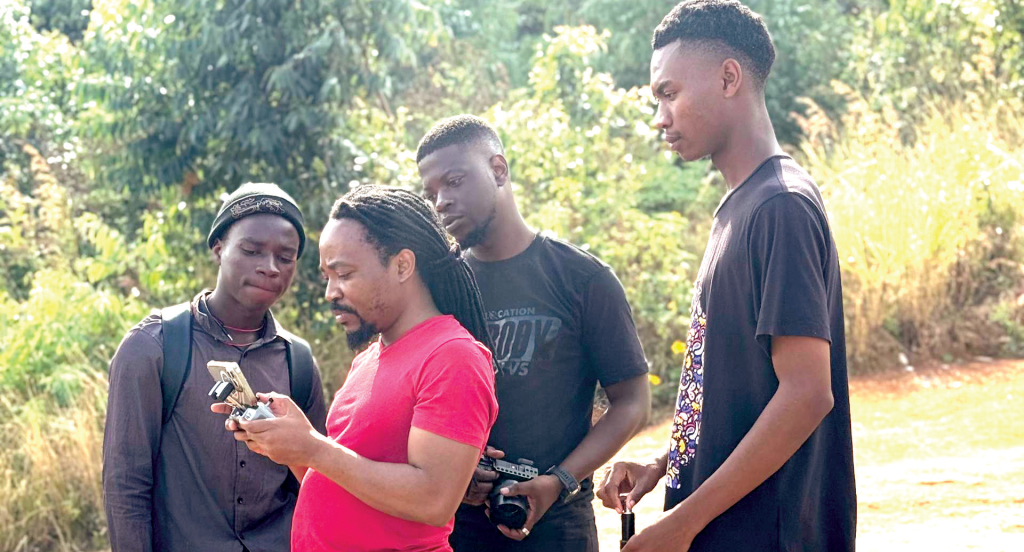
how to operate a camera. | Courtesy of Chirwa
Chirwa’s project titled ‘Examining the Efficacy of Participatory Communication in Disaster Risk Reduction in Malawi’ aims to explore how films can be used as a tool for dialogue, engagement and advocacy.
“The idea is to use these films not just to tell stories, but to open up dialogue between communities and stakeholders,” he said.
Chirwa said despite the severe impact of disasters, many people continue to live in disaster-prone areas.
“Issues of relocation remain central in disaster risk discussions, and there is need to initiate discussions on sustainable solutions,” he said.
He added that theatre, film and visual art have been among the key artistic tools used to engage the communities in raising awareness.
While in Chikwawa community members used visual arts, youths from Chilobwe Township in Blantyre and Nkhulambe in Phalombe have developed two community-led films.
The films titled Ngozi Zogwa Mwadzizi ku Chilombwe and Napolo focus on real-life experiences of disaster survivors and aim to spark conversations around disaster preparedness and inclusive planning.
The films highlight issues such as relocation, disaster risk reduction (DRR) funding, deforestation, inclusive policy and building back better after disasters.
In the case of Nkhulambe, in the film residents are also raising concerns about delayed reconstruction of roads, bridges and a hospital destroyed by Cyclone Freddy in 2023.
Speaking during a dialogue session in Lilongwe on Tuesday where the films were screened, Department of Disaster Management Affairs (DoDMA) deputy director for disaster response Fyawupi Mwafongo commended the use of film, describing it as a good and innovative tool to improve communication and engagement with communities.
“From what we have seen film is a powerful and better tool for communication to entice dialogue and discussions,” he said.
One of the film trainers, Alfred Kaambankadzanja ,said the participatory process has helped communities express themselves more openly about issues that affect their communities.